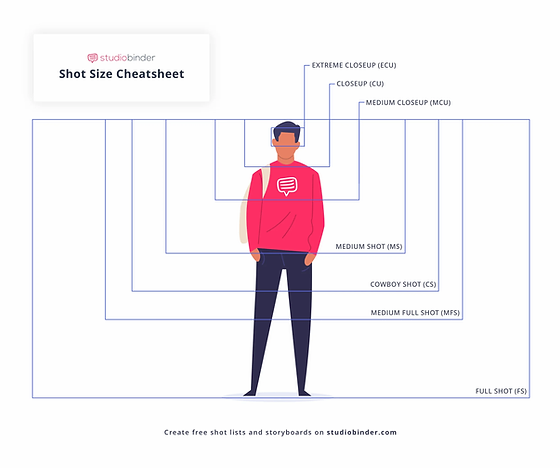
Shot/Frame Sizes
- Extreme Wide Shot (EWS)
Extreme wide shots are used for establishing shots or landscape shots where you want a large area to be visible in the frame. They can also be used to make your subject look small to make them seem distant.
- Wide Shot (WS)
Wide shots are often used to give context to the subject’s surroundings.
- Full Shot (FS)
A full shot shows the subject from head to toe.
- Medium Full Shot (MFS)
In between a Medium shot and a Full shot, a Medium Full Shot frames the subject from the knees up.
- Cowboy Shot (CS)
Variation of the Medium Full Shot, often used in westerns as it frames the subject from the thighs up to show a gun or holster.
- Medium Shot (MS)
Shot from the waist up. One of the most common shots.
- Medium Closeup (MCU)
Shot from the chest up.
- Closeup (CU)
Closeups are often shots containing just the face of the subject. They are used to show the emotions or reactions of the subject. However, they can also be shots of objects or animals, etc.
- Extreme Closeup (ECU)
Extreme Closeups are usually incredibly close shots of the eyes, other facial features, guns, pens, etc. – often being used to build tension.
Lenses
- Prime
Prime Lenses are lenses which have a fixed focal length (they cannot zoom), they are preferred by cinematographers as they often can achieve larger/faster apertures and as such they are often useful for low-light shots.
- Zoom
Zoom Lenses are much more convenient for many different use-cases as they allow the camera operator to change the perceived distance between the camera and the subject. This makes zoom lenses more versatile and convenient.
Portrait Lenses
Portrait lenses are classified as any lens which is optimal for taking photos or videos of people. This often means that they are fast lenses which can produce artistic looking bokeh behind the subject. They are often used in films for close-up shots or medium shots.
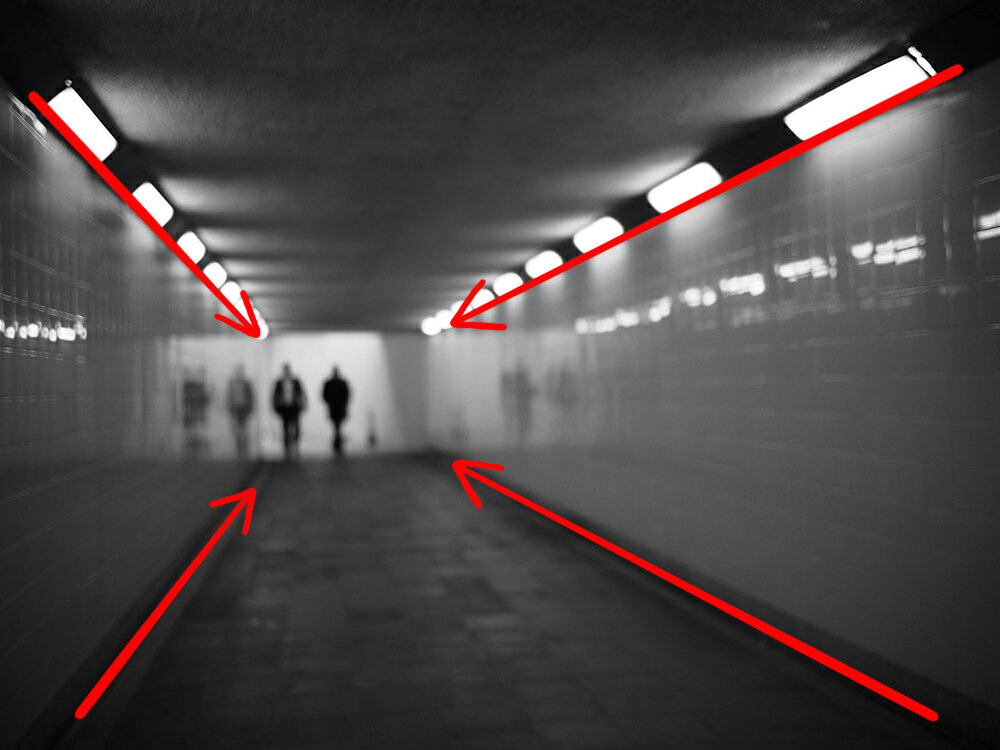
Leading Lines
Leading lines are a compositional technique which directs the viewers’ attention towards a subject using the arrangement of natural and man-made lines which lead the eyes along to the subject.
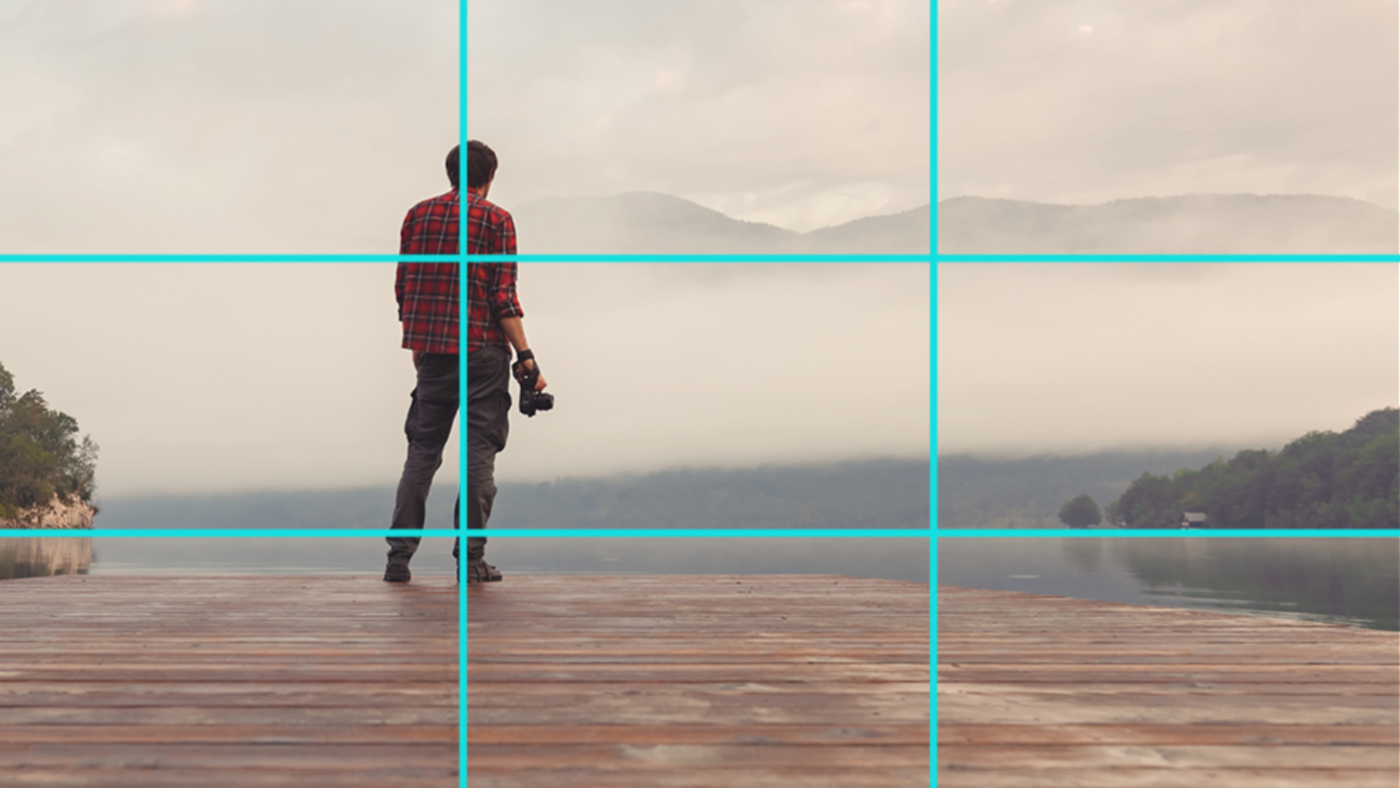
Rule of Thirds
The rule of thirds is another compositional technique which splits a frame into a 3×3 grid. The eyes are naturally drawn to where the lines of the grid intersect, and therefore subjects which the photographer/cinematographer wants to highlight should be placed at those points