
Introduction
Every form of art is influenced by the events and culture of the time in which it was created. Whether it’s consciously taking inspiration from current events or whether it’s subconsciously including references to the culture of the time. The ideologies, beliefs, socio-political climate, technological advancements and even economic or environmental conditions collectively contribute to shaping the narrative and visual language of the production.
Batman
Batman is one of the most famous DC comic characters and has had many different media adaptations, from the original comics to films, TV shows, and even film serials. Batman first appeared in the 29th issue of the inventively named “Detective Comics” in 1939, however, it wouldn’t be until 1940 when Batman became its own stand-alone comic book and quickly rose to popularity. In terms of film and television, there have been a few notable adaptations including two 15-part ‘theatrical serials’ in the 1940s; ‘Batman’ (1966) a film starring Adam West – a continuation of a series of the same name; the 1989-1997 film series, of which Tim Burton directed 2 and Joel Schumacher directed the other 2; 3 animated films (including The Lego Batman Movie); The Dark Knight trilogy directed by Christopher Nolan and Starring Christian Bale; and most recently the Matt Reeves film series starring Robert Pattinson.
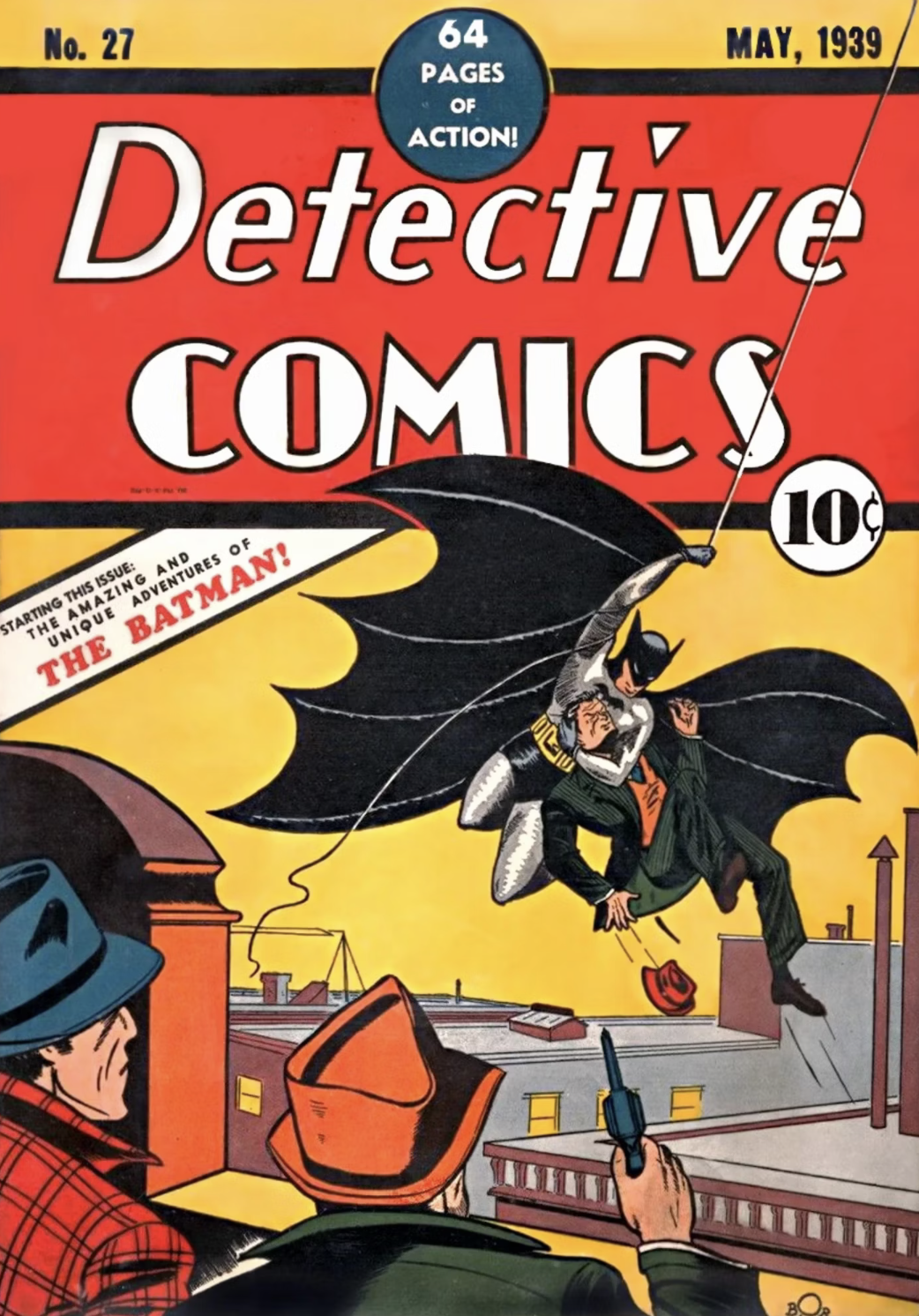
Let’s take the 1980s/90s adaptations and the Christopher Nolan films and look at how they were affected by the era in which they were created and how they differ.
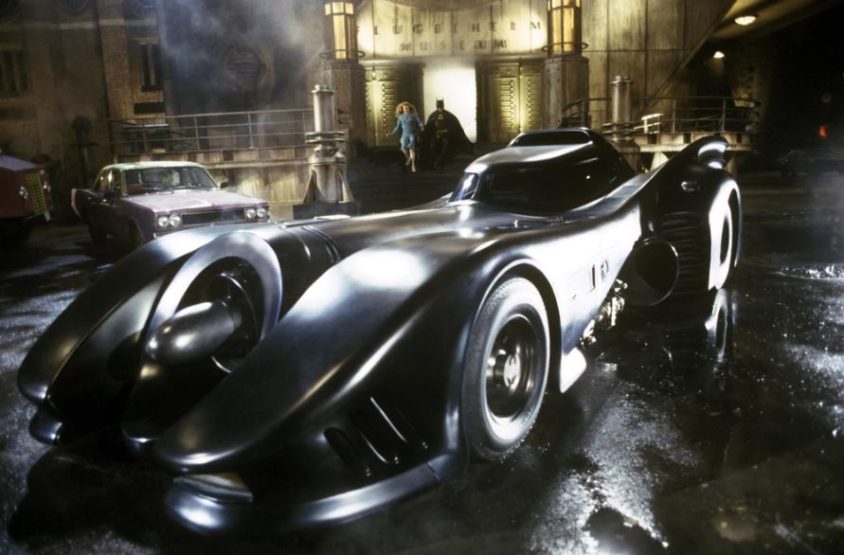
The 1980s/90s version of Batman directed by Tim Burton and Joel Schumacher was made in an era of excess defined by greed and vanity. Supermodels, plastic surgery, and larger-than-life personalities are elements of the zeitgeist which influenced the films. For example, the Batmobile in this adaptation was a big, flashy, attention-grabbing vehicle which was very over the top. Furthermore, in the films, the Joker is attacking the very concept of vanity.
Plastic Surgery
In the 1980s/90s Plastic Surgery became more widespread as public perception changed and it became fashionable. This also meant that there was more of a focus on people’s physical appearance and the rise of vanity. This is referenced in Tim Burton and Joel Schumacher’s Batman, the Joker has plastic surgery to cover his scars from chemical burns.
Super Models
At the time of the films’ production supermodels had grown to massive prominence in popular culture with models such as Cindy Crawford, Naomi Campbell, Linda Evangelista, and Christy Turlington (Ahn, 2023) becoming celebrities in their own right, they became more than just icons in the fashion industry, becoming ‘cultural touchstones for an entire generation’ (Ahn, 2023) and this new form of celebrity was recognised and featured in the films: Kim Basinger was cast to play Viki Vale, Batman’s love interest and Jerry Hall was cast to play Joker’s partner. Before becoming actors they had both been models, and even in the film, Jerry Hall’s character was a model before she joined the Joker in his life of crime.
Christopher Nolan’s Batman films were very different from those that had come before. The Dark Knight trilogy were produced after the September 11th terrorist attacks in the US and this becomes obvious once you watch the films.
The Legacy of the Attacks
After the attacks people around the world and in the US became suddenly much more aware of the threat of terrorism and they were getting ready for a new war – “The war on terror”. So, suddenly, the world became a much greyer place. This is seen in the style and tone of the trilogy. They are much grittier in style and much more serious than those that had been produced earlier. In the films Joker is also portrayed as simply being a terrorist who wants to see the world burn – a physical representation of what people of the US and the world had been demonising since the attacks.
Militarization of the Police
In response to 9/11 in there was a massive (and controversial) militarization of the police service across the country. This is shown in the films through the design of the batmobile. It’s sharp, angular, sheet metal edges and stealthy matt black paint job, not to mention the incredibly sophisticated weapons system, make it nothing less than a suped-up tank.
The USA PATRIOT Act
As well as arming the police, following 9/11 the US government introduced a new act of legislation called “The USA PATRIOT Act” standing for “Uniting and Strengthening America by Providing Appropriate Tools Required to Intercept and Obstruct Terrorism”. It brought into law many new provisions, including among others the ability for law enforcement to wiretap phone calls and email communications without a warrant and for law enforcement to detain immigrants indefinitely without trial. This legislation was massively controversial and can be seen in to be symbolised in The Dark Knight when Batman sets up a massively invasive surveillance network to find the Joker
Modern Day
In today’s world, art still mirrors what’s going on around the artist. For instance, current events like the ‘Me Too’ movement and the growing awareness of men’s mental health are shaping what we see in films.
Last year, one of the most culturally significant films was released – The Barbie Movie. It took inspiration from the feminism and the ‘Me Too’ movements, reflecting the issues that matter right now.
And then there’s Joker (2019), which dives into men’s mental health. Unlike past versions of the character who portray him as nothing more than a villain or a terrorist, this movie gives the Joker a backstory and shows him as a real person dealing with serious issues. It’s a fresh take that humanizes and gives him emotion unlike what has been seen previously.
I am a part of Generation Z. Gen Z consists of people born between 1990 and the early 2010s and are the first ‘digital native’ generation, they are more conscious of mental health issues but are predicted to be the most hardworking and anxious.
When compared with previous generations such as Millenials, Gen X and Boomers, Gen Z are much more open-minded to and involved in topics such as LGBTQ+ rights, racial justice, social equality and other social issues. This is heavily reflected in media, for example, modern-day remakes of films such as The Little Mermaid, and Tom Holland’s Spider-man contain a more diverse cast and more relevant subject matter.
This video quite eloquently takes you through the differences between different generations. Generation Z’s formative events include an increase in global terrorism, Trump’s Election, Brexit, etc. Generation Z grew up with a Black American president and same-sex marriage as constitutional rights which, as mentioned in the video, may mean Gen Z will take social issues for granted.
In terms of what influences me personally, one of the main things is technology. I love using technology to explore new ways to make my films interesting and unique. For example, I’ve long had a love for lighting (as in using a lighting desk to professionally control stage lights). I always loved going to the theatre and in secondary school I first got the chance to use a lighting desk, and lighting instantly became my favourite thing to do, recently I purchased my first lighting interface and that has inspired me to create all kinds of cool effects for music videos and suchlike, In fact I’m going to use it for my visual project.