
Research
The Idea
The Pitch

Lighting Techniques
3 Point Lighting 3 Point lighting is the simplest method of lighting a subject. It is made up of 3 components: the key light, the backlight and the fill light. The key light serves…
Composition & Lens Research
Shot/Frame Sizes Extreme Wide Shot (EWS) Extreme wide shots are used for establishing shots or landscape shots where you want a large area to be visible in the frame. They can also be used…
Who is a Writer?
Who is a Director?
Pre Production
The Paperwork
So, now that the research was completed. I could begin work on the rest of the film. I began by writing the screenplay, before the script breakdown and the shot list:
Created by Jacob Barnes
Created by Jacob Barnes
Created by Jacob Barnes
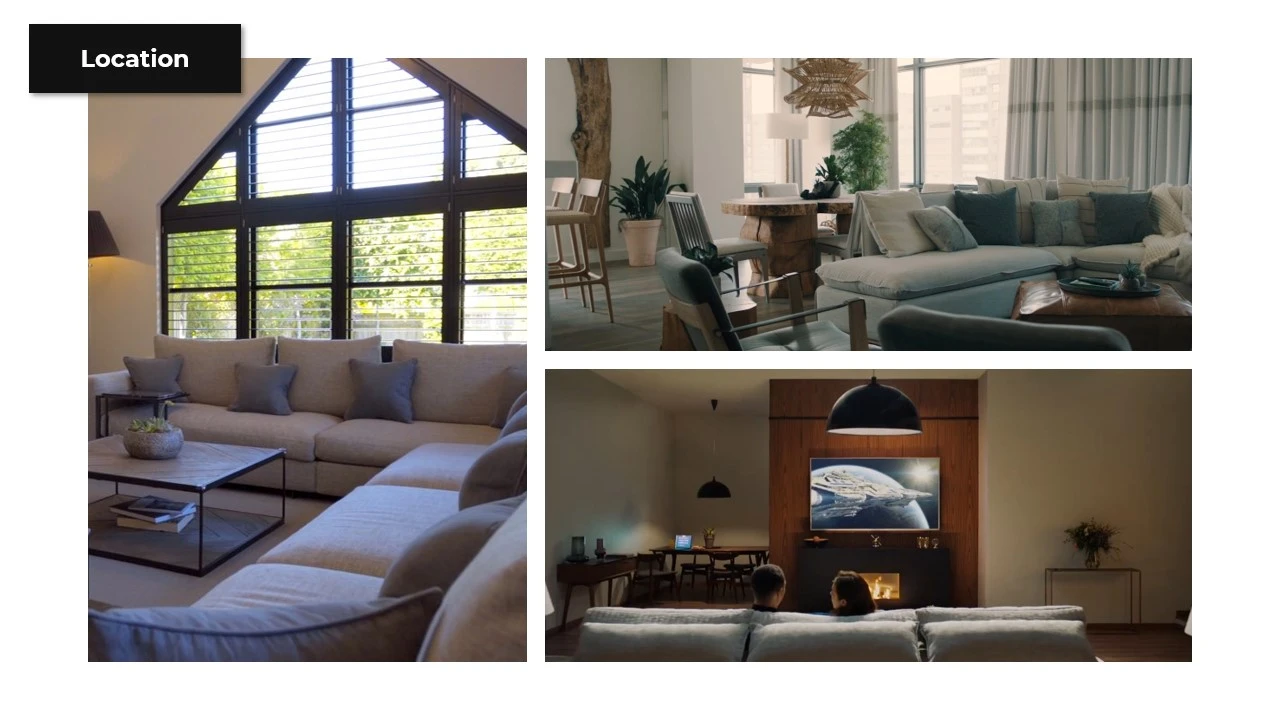
The Location
Then I moved onto finding a location with the producer: Kyle. We were initially going to use Kyle’s living room as the set for the film, however that didn’t work out as something came up which meant that Kyle’s house would be unavailable. We considered using my living room, however, because building works were happening at the time, that was quickly ruled out, so was David’s house as that would have been too far to travel due to him living in Newcastle. We tried to find a location from our peers however we were not lucky. So, in the end, we settled on building a set in the college.
We found out that there were some set-pieces (“flats”) which had wallpaper on them in the studio and we thought that they would might just be convincing enough to make it seem as if it was shot in an actual living room.
The Cast
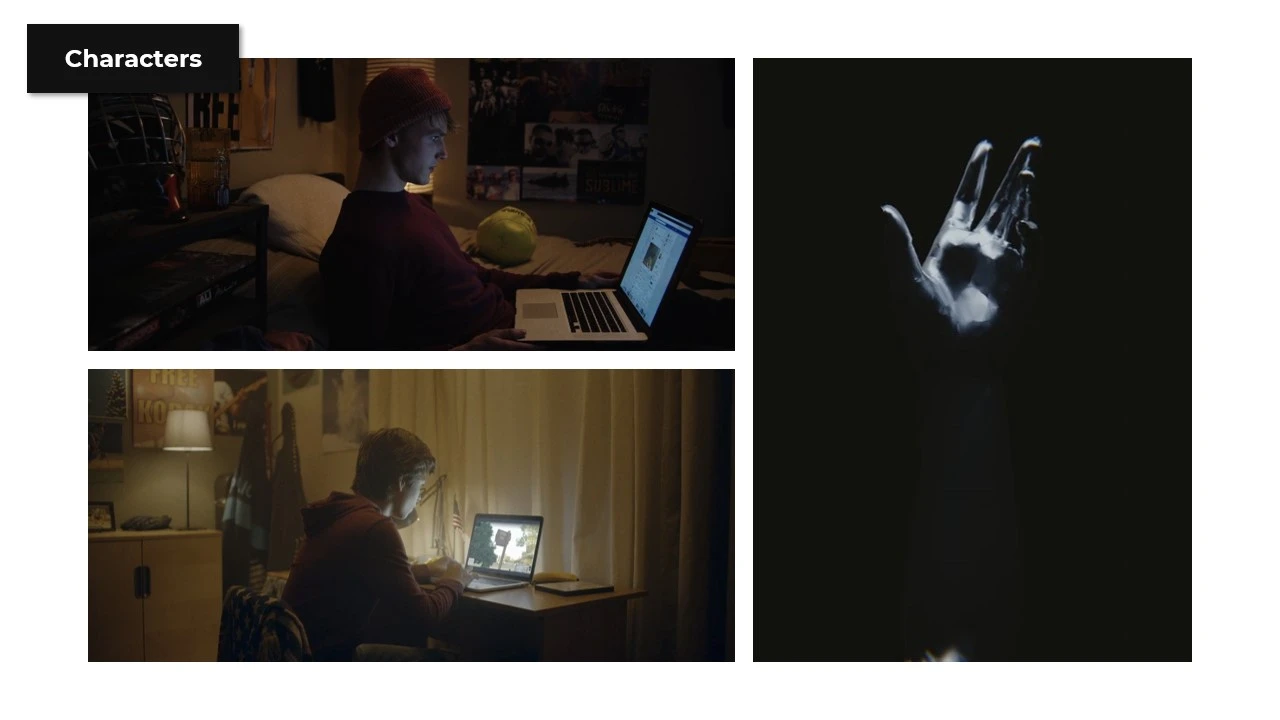
From the beginning of the project I planned on working with Aaron Moore who I had worked with for previous projects and knew would be available, and so he was cast as the Teenage Boy.
The Props & Set Dressing
To make the set look slightly more like a living room, we used a selection of props such as a games controller to show that the character is open-minded and open to adventure; a Stephen King novel to build tension and to foreshadow events; and a baby photo of Aaron to add a sense of innocence to the character. And of course the main prop, the laptop, which was a broken laptop provided by Alex.
In terms of set dressing we found a sofa and a table in the theatre, we used the flats from the studio and a coffee table from the building’s lobby.
So with everything planned it was time to start filming…
Production
More Paperwork…
Generated by Studiobinder for Jacob Barnes/Kyle Dowman
Created by Kyle Dowman for Jacob Barnes
Created by Jacob Barnes, Signed by Kyle Dowman and Aaron Moore
The Shoot
The shoot began on Monday 9th October and was planned to only take one day however we ended up having to do pickups on the 11th, 12th and the 13th. On the Monday we shot in A10 however for the pickups we filmed in the studio so that we didn’t have to take the set down each time.
In total, for the shoot we used:
- 4x Amaran 60ds
- 2x Lumix GH5s
- 1x Lumix G7
- 1x 50mm Prime
- 1x 35mm Prime
- 2x Tripods
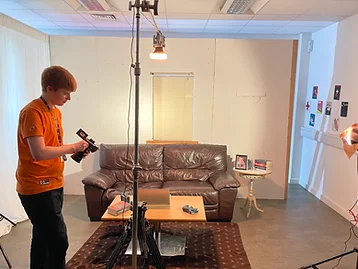
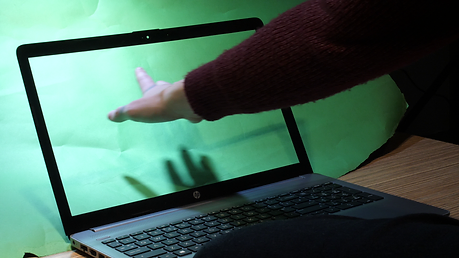
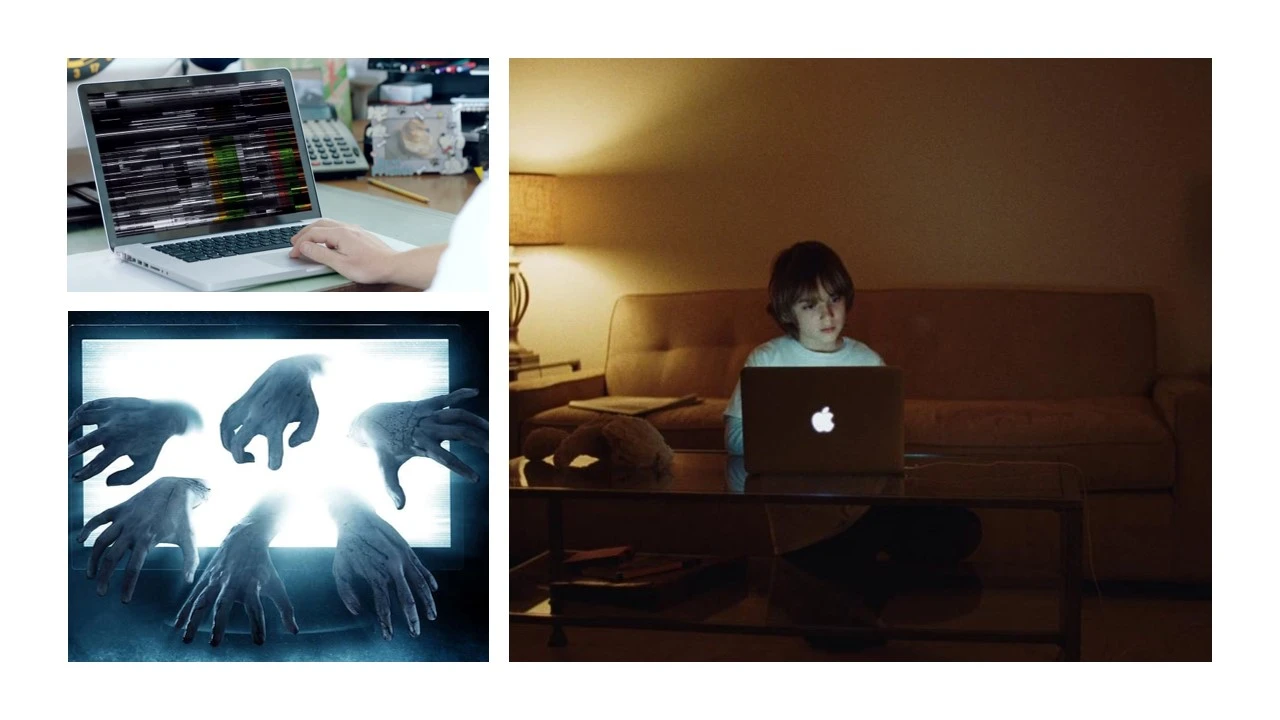
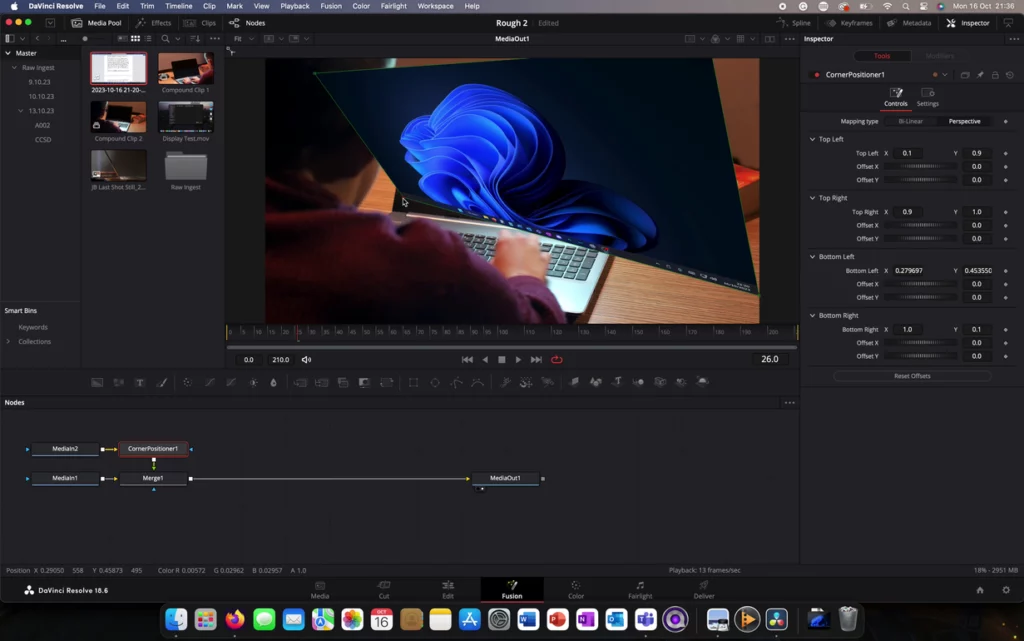
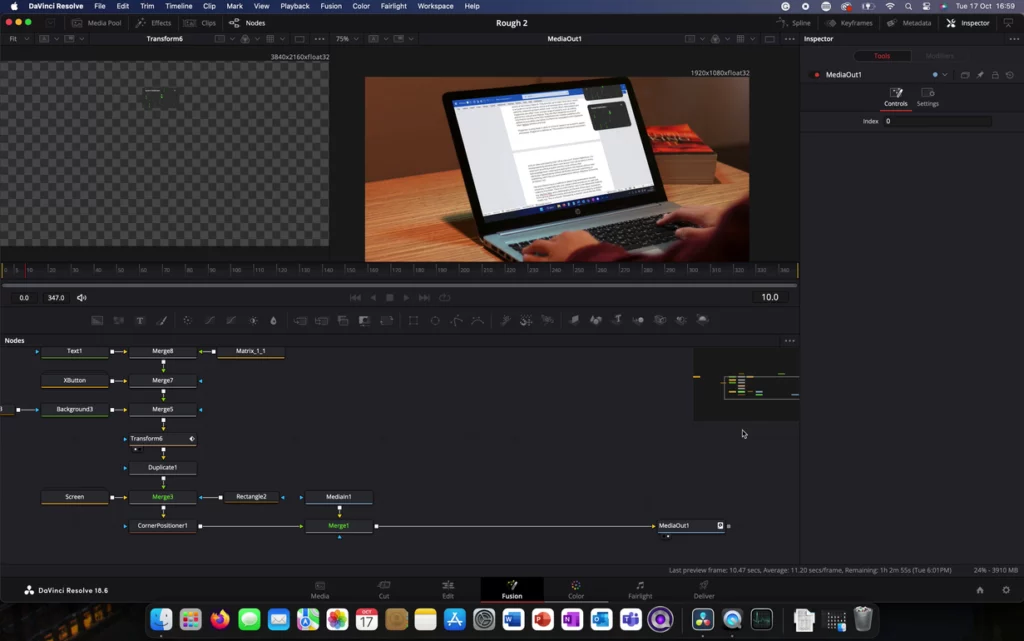
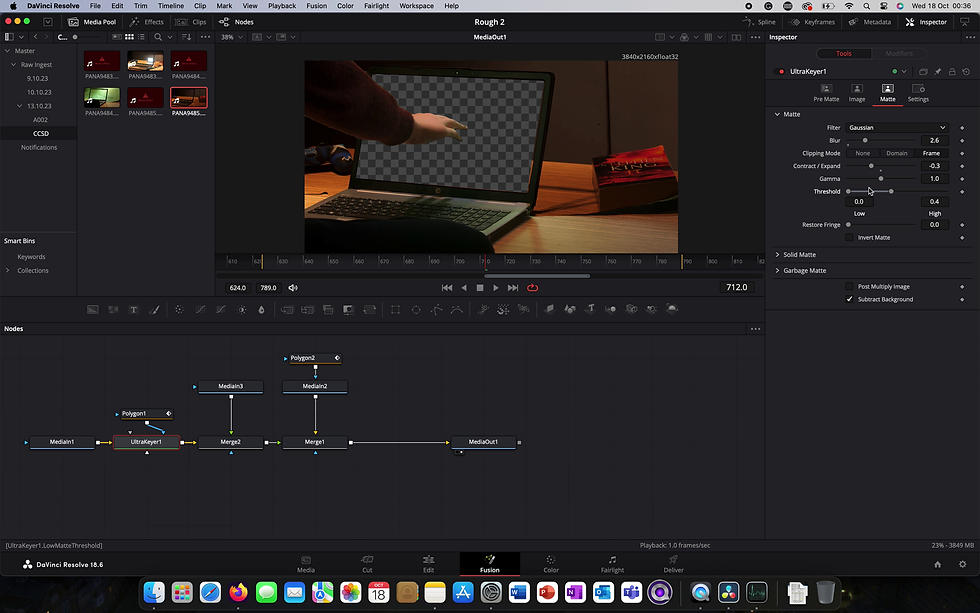
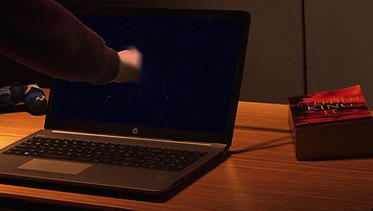
For the shots where the hand goes through the screen of the laptop we actually removed the screen, leaving just the bezel so that the hand can go through the screen, with a green screen behind it which will be keyed later on.
We found that the VFX shots were much more complicated than we had originally anticipated – hence the 3 pickups. Therefore we ended up running out of time with Aaron before we had gotten all of the close-ups we needed meaning that many shots had to be removed, and I had to substitute my hand in for a few scenes.
But now with the filming completed it was time to edit…
Post-Production
The Edit
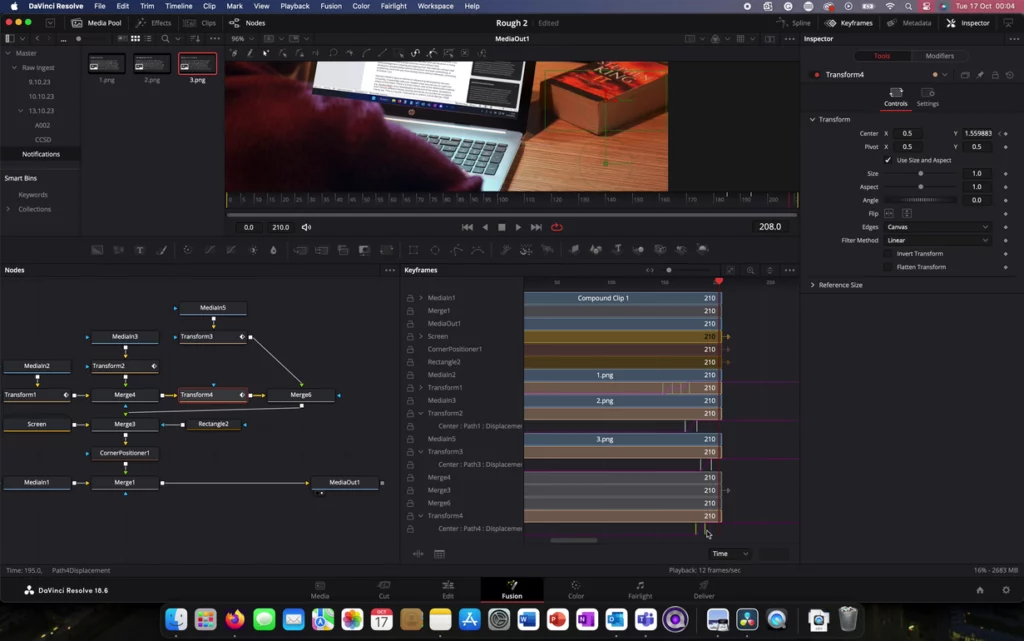
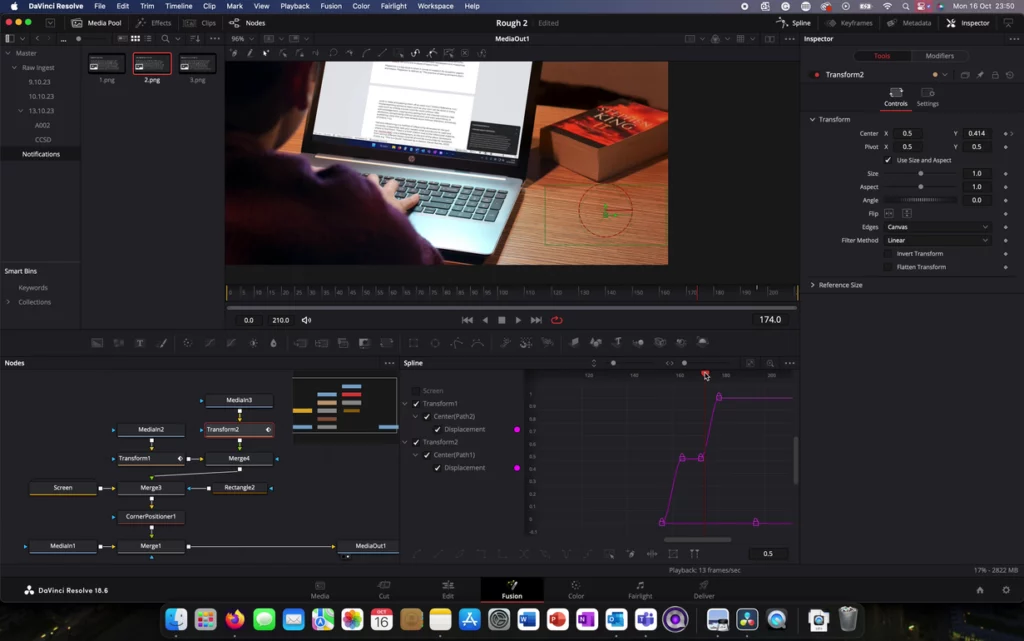
The Edit process was the most annoying part of the production especially because of the VFX shots which, as I mentioned earlier, ended up being much more complicated than I had first anticipated.
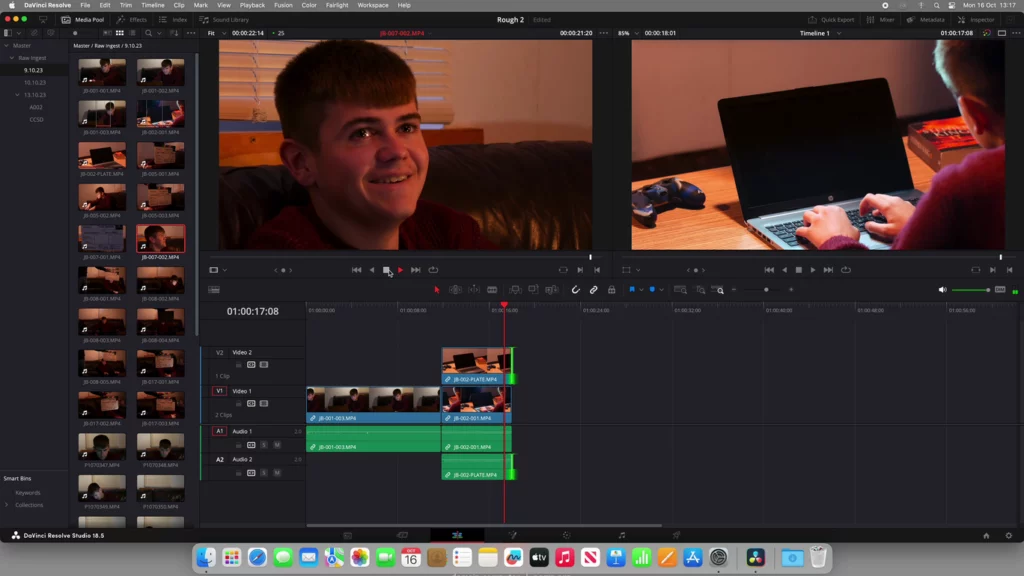
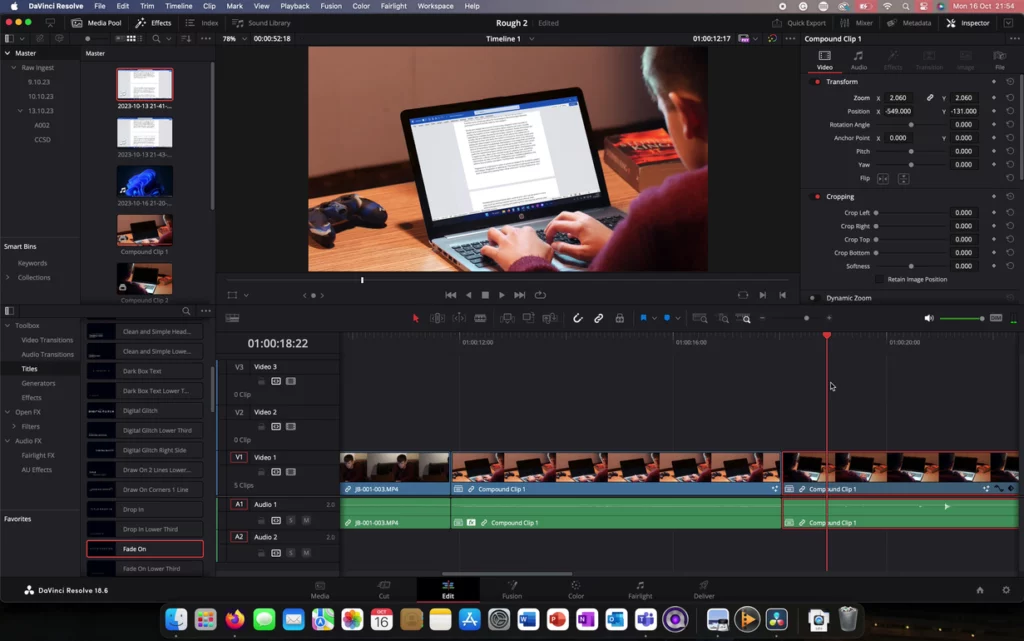
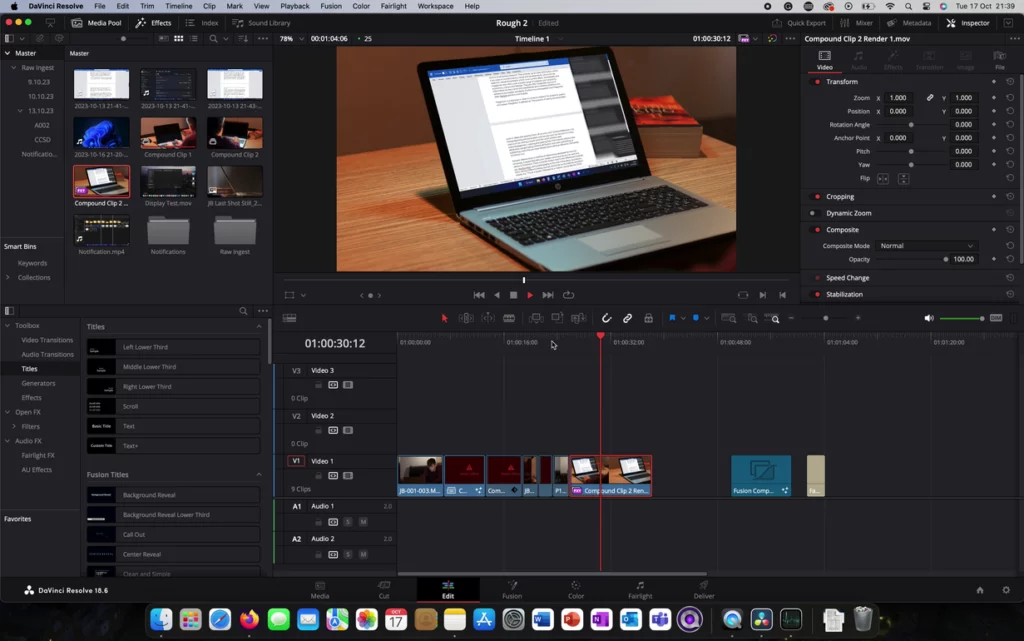
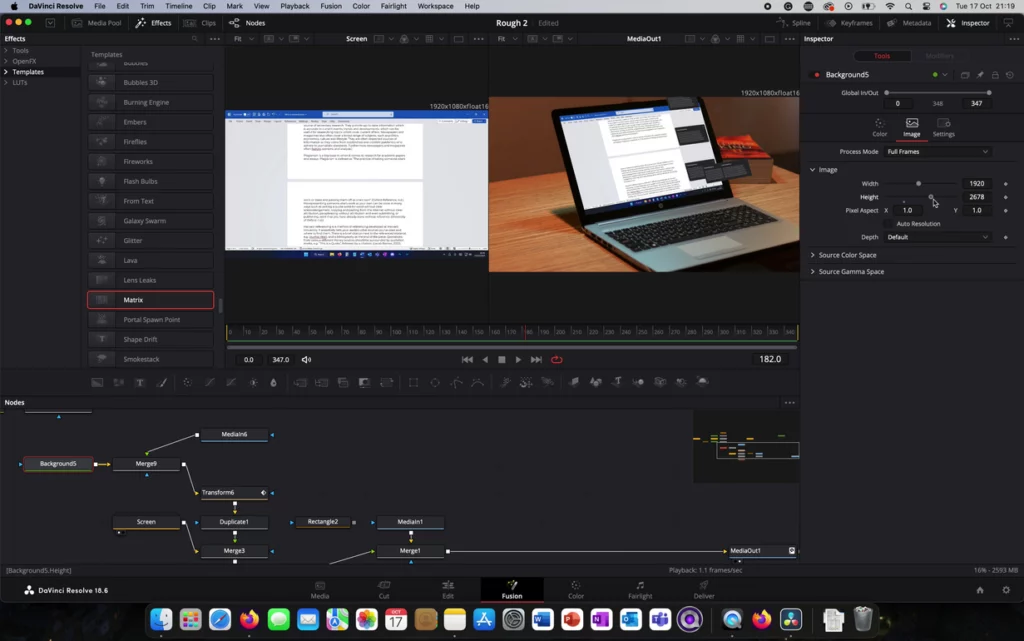
I began by putting all of the non-VFX shots onto the timeline and put them in order. Then, I began work on the first VFX shot which was a simple laptop screen replacement.
Evaluation
Tutor Evaluation
Once the film was finished I sent it to Paddy and he gave me the following feedback:
“It’s a really good attempt and is quite effective especially the final shot which works really well. The colour grade is bit too orange and doesn’t quite match the lighting outside the window which causes a separation. It might have been worth putting some kind of rug down to sell the living room location or having a practical light in the scene. I would have tried to have some more distance between the background and foreground that would have given you some more options with the frame. It’s also not quite believeable when the character is typing as you can’t see anything happening on screen. All in all though it’s a good effective little short that needs a title. Well done”
Peer Evaluation
I also showed my film to some of my friends and whilst most of them had some positive comments regarding the cinematography and sound design, the main criticisms were regarding the first main VFX shot where he puts his hand through the portal for the first time as they deemed it ‘unconvincing’ and they also pointed out that no text was appearing on the screen as he was typing.
Self Evaluation
Personally, I feel that whilst there are some good shots, I am not completely happy with the finished film. I think that my biggest issue with the film is the location – to me it simply doesn’t pass as a living room as it’s very obviously a set. I wish that we’d been able to source an actual living room location, and whilst we initially did have a location, unfortunately in the end we were unable to use it and we had to shoot in the studio, which is much more difficult to use as it meant we had to work with sets and lighting – which was difficult to make look convincing. I also wish that I had planned out and test-shot some of the VFX shots in pre-production before we arrived on set, because they took much longer to get right than we had anticipated which meant that we ran out of time with our actor and didn’t get all the shots we wanted with him. Furthermore, I wish I could have spent more time on the VFX shots – especially the one in which he puts his hand through the screen for the first time as it does not look convincing in my opinion (and in the opinion of my peers)
In terms of fufilling my role I think I did an alright job at being a director, however I didn’t do an amazing job at directing the actor and I wasn’t good at communicating my intentions to the other crew members which sometimes resulted in confusion among the team and wasted precious time with Aaron. However, in general I think we worked well as a team to produce something which looks decent.